|
|
 |
|
|
 |
|
|
|
|
|
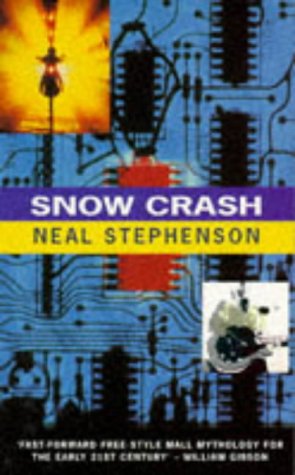
Snow Crash by Neal Stephenson
Enter Hiro Protagonist--hacker, samurai swordsman, and pizza- delivery driver. When his best friend fries his brain on a new designer drug called Snow Crash and his
beautiful, brainy ex-girlfriend asks for his help, what's a guy with a name like that to do? He rushes to the rescue. A breakneck-paced 21st-century novel, Snow Crash interweaves everything from Sumerian
myth to visions of a postmodern civilization on the brink of collapse. Faster than the speed of television and a whole lot more fun, Snow Crash is the portrayal of a future that is bizarre enough to be
plausible.
|
|

|
Diamond Age by Neal Stephenson
This novel is a mixture between cyber-space science finction and traditional fairy tales. Stephenson understands to draw the readers attention
to the story of a little girl about to save the world.
A definite must for the real fan.
|
|
|
Crytomonicon by Neal Stephenson
Cryptonomicon zooms all over the world, careening conspiratorially back and forth between two time periods--World War II and the present. Our 1940s heroes are the brilliant mathematician Lawrence Waterhouse, cryptanalyst extraordinaire, and gung ho, morphine-addicted marine Bobby Shaftoe. All of this secrecy resonates in the present-day story line, in which the grandchildren of the WWII heroes--inimitable programming geek Randy Waterhouse and the lovely and powerful Amy Shaftoe--team up to help create an offshore data haven in Southeast Asia and maybe uncover some gold once destined for Nazi coffers.
|
|
|
Zodiac by Neal Stephenson
Sangamon Taylor is spreading the word about corporations piping toxic wastes into the water from his 40-horsepower Zodiac raft. Now, he's wanted by the FBI, the Mafia, and a
group of Satan-worshipping drug dealers--the least of his problems. Because somewhere out there is an unhinged genetic engineer and a lab concocted bacterium that could destroy all ocean life.
|
|
|
In the Beginning ... Was the Command Line by Neal Stephenson
Stephenson tackles many myths about industry giants in this volume, specifically Apple and Microsoft. By now, every newspaper reader has heard of Microsoft's overbearing
business practices, but Stephenson cuts to the heart of new issues for the software giant with a finely sharpened steel blade. Apple fares only a little better as Stephenson (a former Mac user himself)
highlights the early steps the company took to prepare for a monopoly within the computer market--and its surprise when this didn't materialize. Linux culture gets a thorough--but fair--skewering, and
the strengths of BeOS are touted (although no operating system is nearly close enough to perfection in Stephenson's eyes).
|
|
|